Sports Injury Treatment in Baltimore | Physica Medica | Physica Medica
Skip to content
Physica Medica logo
Physica Medica logo Consult
Physica Medica logo
Request a Consultation
Back Pain · Baltimore

The Injury Keeps Coming Back. That's the Diagnosis.

Most sports injuries are treated at the site of pain. The ankle, the hamstring, the shoulder. What gets missed is the movement pattern that put that structure under load in the first place. Until that changes, the injury returns. Dr. Birikov treats the chain, not just the link that broke.

Dr. Maks Birikov, DPT — the first master-level dry needling practitioner in Baltimore. Manual therapist to Baltimore Ravens, Orioles, and Baltimore Blast players.

Request a Consultation

Full-hour, one-on-one sessions in Fells Point. No referral required.

Why It Returns

Sports Injuries Treated at Physica Medica

Dr. Birikov works with athletes across contact sports, endurance sports, and overhead disciplines. Hamstring strains and hip flexor tears. Rotator cuff injuries and shoulder impingement. IT band syndrome, runner's knee, and patellar tendinopathy. Ankle sprains that never fully healed. Plantar fasciitis. Lumbar strain, SI joint dysfunction, and sports-related sciatica. Elbow and wrist injuries in throwing athletes. Cervical strain in contact sport athletes.

If you have been cleared by imaging and still can't perform, or if the same injury keeps returning after treatment, that is exactly the patient this practice is built for.

No referral is needed to book. Dr. Birikov reviews your intake information personally before your first session.

The Approach

The Physica Medica Difference: Hands-On Recovery, Not Just Rehab Protocols

Standard sports medicine and most PT clinics run athletes through protocols. A hamstring strain gets a hamstring protocol. A shoulder impingement gets a rotator cuff protocol. The protocol is the same regardless of how you move, how your pelvis is loaded, or what your fascia is doing above and below the injury site.

That is not how Dr. Birikov works. Every session starts with a full movement assessment that looks at the whole kinetic chain. Where is the tissue restricted? Where is the load being redirected? What compensatory pattern developed after the original injury, and is that pattern now producing the secondary symptoms you came in with?

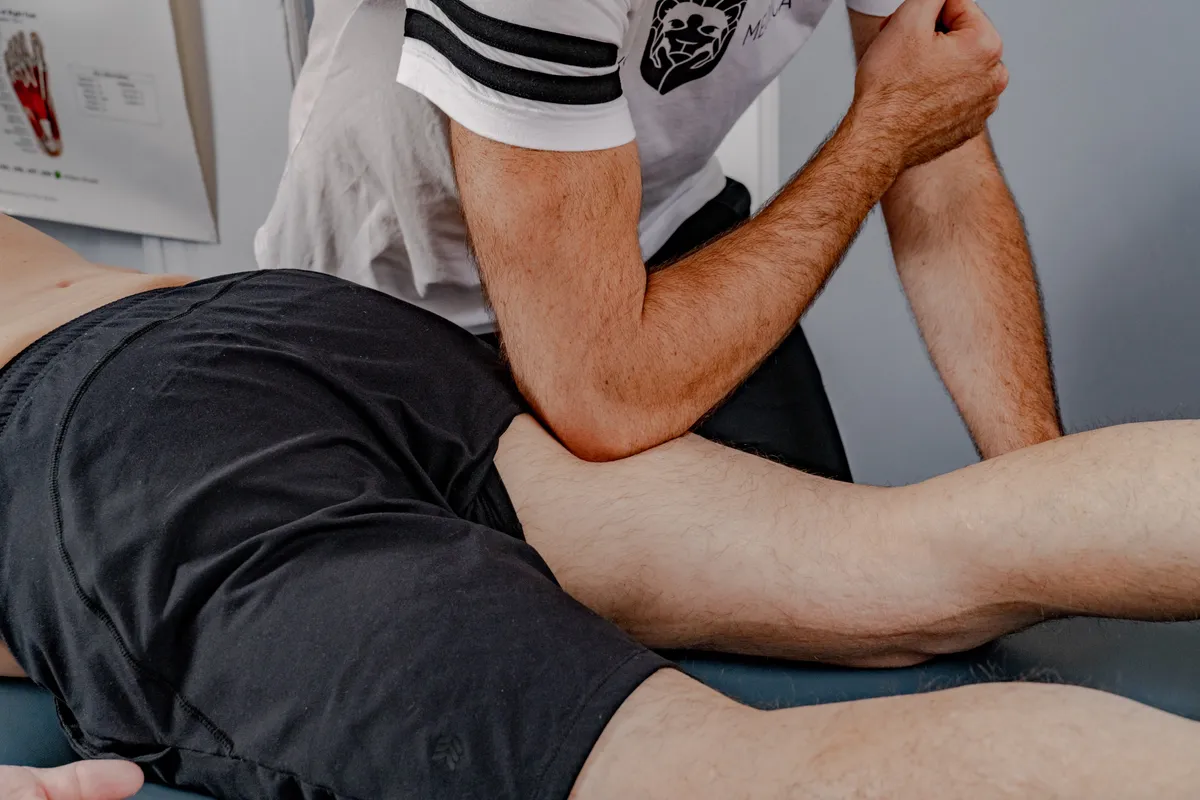
The treatment is manual. Hands on tissue, instruments on adhesion, needles in trigger points that won't release any other way. There is no home exercise program handed to you at the end of the session as a substitute for actual treatment. The work happens in the room.

The Toolkit

Treatments Used for Sports Injury Recovery

Most sessions draw on two or three modalities, chosen based on what the tissue assessment shows. This is not a fixed menu — it is a clinical decision made in the room.

One-on-One Manual Therapy

Maks is not only knowledgeable, but highly intuitive, thus making him a natural healer. He's attentive and compassionate, and if you are willing to put in the work he is willing to support you every step of the way.

Learn more →

One-on-One Manual Therapy

Maks is amazing! He helped me work through an Achilles injury that I had been "living with" for years and helped me learn so much about my body! I now know how so much more about movement and how to fix things in my body when they hurt. Thanks!!!!

Learn more →
Documented

Professional Athlete Experience Brought to Every Patient

Dr. Birikov works with players from the Baltimore Ravens, Baltimore Orioles, and Baltimore Blast. These are athletes whose careers depend on accurate diagnosis, fast tissue response, and recovery that actually holds. The standard of assessment and manual treatment is identical regardless of whether the patient is a professional athlete or a recreational runner.

What that means for you

Before
After

It means the clinical reasoning behind your treatment is not derived from a general PT curriculum. It comes from working with athletes who cannot afford a missed diagnosis or a protocol that addresses the symptom while ignoring the cause. That experience informs every intake, every assessment, and every session at Physica Medica.

Honest Qualification

Recurrent Sports Injuries — Why They Keep Happening

This is for you if

  • The same injury keeps returning after treatment that helped temporarily
  • You have been cleared by imaging but still can't perform at full capacity
  • You have already done PT, massage, or chiropractic without lasting change
  • You want hands-on manual treatment, not a supervised exercise circuit

This is not for you if

  • You have an acute traumatic injury that has not yet been evaluated by a physician
  • You have red-flag symptoms such as progressive neurological weakness or loss of bladder or bowel control
  • You are looking for insurance-billed visits three times a week
  • You expect one session to undo a movement pattern that has been building for years
The Hour Itself

Why Recurrent Injuries Are a Movement Problem, Not a Tissue Problem

Most recurrent sports injuries are treated as if the tissue just didn't heal properly. More rest, more strengthening, more of the same protocol. But the tissue usually did heal. What didn't change was the underlying fascial restriction or postural compensation that overloaded the structure in the first place.

A tight hip flexor that was never released will continue to alter pelvic mechanics on every stride. A restricted thoracic spine will continue to shift load onto the shoulder in every overhead movement. The injury site changes. The pattern doesn't. That is why the hamstring tears again, or the ankle rolls again, or the shoulder impingement returns six months after the last course of PT.

Dr. Birikov's assessment looks specifically for that pattern. Where is the fascial restriction that is driving the compensation? Where is the load actually coming from? Treating the answer to that question is what separates a recovery that holds from one that doesn't.

Good Questions

Book Your Sports Injury Consultation in Baltimore

How is hands-on physical therapy different from exercise-based PT for back pain?

Sessions are one full hour, one-on-one with Dr. Birikov at 800 S Bond St in Fells Point. No referral is required. Treatment is out-of-pocket; this is not an insurance-billed practice. That model exists because meaningful manual treatment cannot be delivered in fifteen-minute increments billed to a carrier.

How many sessions will I need for back pain treatment?

Most athletes with sports injuries see meaningful change within four to six sessions. Chronic or recurrent presentations with long-standing compensation patterns typically require more. Dr. Birikov will give you an honest assessment of your timeline at intake, not a vague range designed to avoid commitment.

Can you treat back pain that hasn’t responded to other therapies?

If you have already tried PT, massage, or sports medicine and you are still dealing with the same injury, that history is not a strike against you. It is the most useful clinical information you can bring to the first session.

The Next Step

Ready to Find Out What's Actually Driving the Injury?

Describe the injury, how long it has been present, what you have already tried, and what your sport or activity demands. The more specific you are, the more useful Dr. Birikov's response will be.

Dr. Birikov reads every inquiry personally and responds directly. Call 443-228-8029 or submit your information through the contact form.

Preview Give Feedback