

Myofascial Cupping: Clinical Therapy, Not a Spa Treatment
Dr. Maks Birikov, DPT · Baltimore, MD · 443-228-8029
Myofascial cupping at Physica Medica is a hands-on clinical intervention targeting fascial adhesions, restricted soft tissue, and areas of poor circulation that contribute to chronic pain and movement dysfunction. It is not a relaxation treatment.
Out-of-network by design. HSA and FSA accepted.
How Cupping Works on Fascia and Soft Tissue
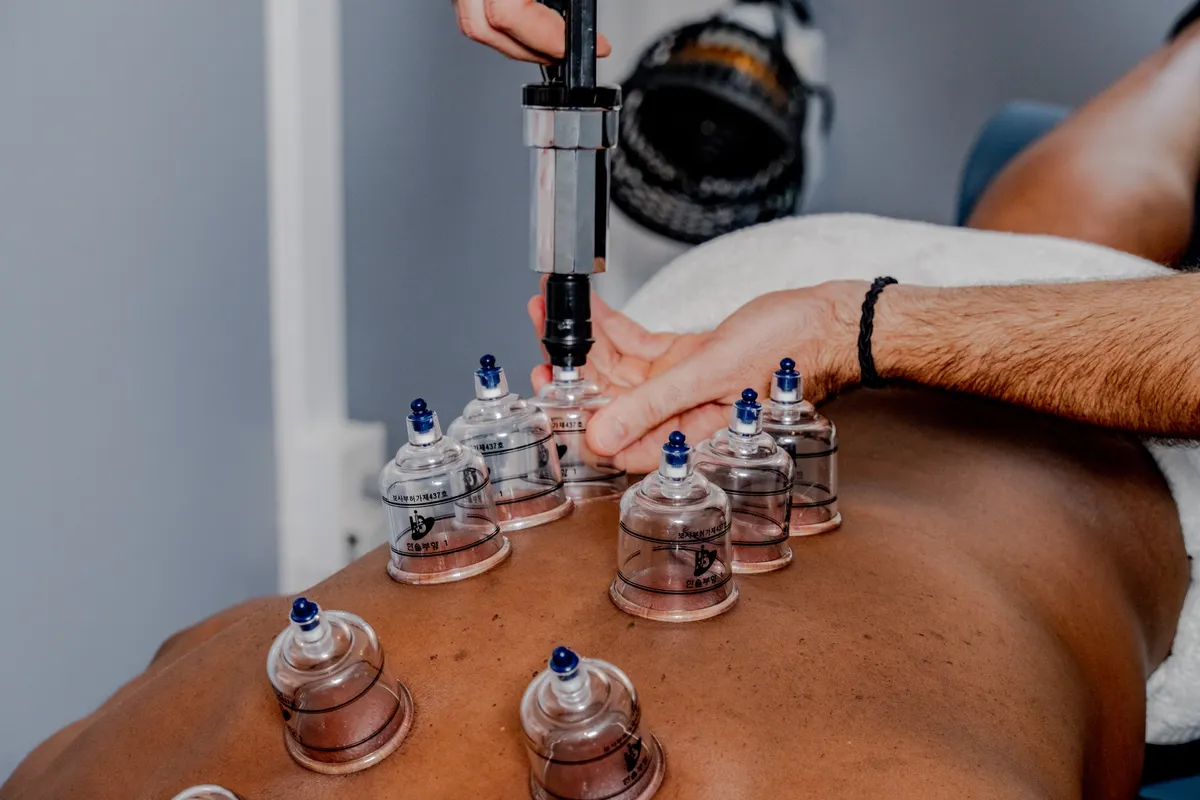
Most manual therapy pushes down into tissue. Cupping does the opposite. Suction cups are applied to the skin and underlying fascia, creating a negative pressure that lifts the tissue layers apart. This decompression increases local blood flow, reduces adhesion between fascial planes, and creates space for restricted structures to move again.
The fascia is a continuous web of connective tissue that surrounds every muscle, nerve, and organ in your body. When it tightens or adheres from injury, surgery, chronic tension, or repetitive strain, it restricts movement and generates pain that often has nothing to do with where the pain actually appears. Cupping addresses that restriction at the source.
At Physica Medica, cups are moved across the skin in a technique called dynamic or gliding cupping, rather than left stationary. This allows Dr. Birikov to work through a range of tissue and track how restrictions respond in real time: a clinical approach, not a protocol.
What Myofascial Cupping Treats
Cupping is most effective where the problem involves tight fascia, restricted circulation, or layers of tissue that have stopped sliding freely against one another. That covers more ground than most people expect.
Conditions that respond well to myofascial cupping include
- Chronic back and neck pain with a fascial or postural component
- Sciatica and nerve-related leg symptoms driven by soft tissue compression
- Sports injuries with residual stiffness or scar tissue after the acute phase has resolved
- Post-surgical restriction and adhesions
- Trigger points and muscle knots that have not responded to massage or stretching
Cupping is not appropriate for
- TMJ and jaw tension, including cases connected to tongue restriction and breathing dysfunction
- Vocal tension in singers and performers, including jaw, neck, and thoracic restriction that limits breath support and range
- Open wounds, active skin infections, or inflamed tissue in the acute phase
- Areas with compromised circulation or clotting disorders. Discuss your history before booking.
About the Marks: What to Expect After a Session
Cupping marks are the most misunderstood part of this therapy. They are not bruises in the conventional sense. A bruise is caused by blunt trauma that ruptures blood vessels. Cupping marks appear because suction draws stagnant blood and metabolic waste products toward the surface of the skin, accelerating their clearance.
What the color actually means
Darker marks indicate areas of greater restriction and poorer local circulation, the tissue that most needed the work. Lighter marks or no marks at all suggest tissue that was already moving freely. Over successive sessions, as circulation improves and fascial restriction resolves, marks typically become lighter and fade faster.
The practical reality
Most marks fade within three to seven days. They are not painful to the touch in the way a bruise is. They are circular, typically a few inches in diameter, and range from pink to deep red or purple depending on the tissue involved.
How Dr. Birikov Uses Cupping as Part of a Broader Treatment Plan
Cupping is one tool. It is rarely the only one used in a session, and it is never applied without a clinical reason.
Frequently Asked Questions
Will cupping leave marks on my skin, and how long do they last?
Yes, cupping typically leaves circular marks on the skin. These are not bruises. They result from increased blood flow and the movement of stagnant fluid toward the skin surface. Darker marks indicate areas of greater restriction. Most marks fade within three to seven days and are not painful to the touch. If you have an event or reason to avoid visible marks, mention it before your session and Dr. Birikov will adjust placement.
What is the difference between myofascial cupping and spa cupping?
The primary difference is assessment and intent. Spa cupping is applied to produce relaxation and general circulation benefits, typically using a fixed protocol without clinical evaluation. Myofascial cupping at Physica Medica begins with hands-on assessment of your specific restrictions, uses dynamic gliding technique over stationary placement, and is integrated with other clinical tools, IASTM, dry needling, and manual therapy, based on what the tissue actually needs. If your goal is lasting structural change over temporary relief, the clinical model is the relevant one.
Does cupping therapy hurt?
Cupping creates a pulling sensation that ranges from mild to intense depending on how restricted the tissue is. Most patients describe it as uncomfortable in a productive way: noticeable, but not sharp or alarming. Areas with significant fascial restriction tend to feel more intense initially and ease as the tissue releases. Post-session soreness, similar to what you might feel after a deep massage, is common for 24 to 48 hours. Plan accordingly if you have physically demanding work the following day.
An honest arc
Before you leave, an estimate of how many sessions this will take and what will change first. Most patients feel meaningful change within four to six.
Deep manual work can be intense while it is happening and can leave a day or two of soreness, the kind that follows hard exercise rather than injury. Cupping can leave circular marks that fade within a week. Dr. Birikov talks through pressure as he works and adjusts on request. Nobody is asked to endure anything silently.
Book a Myofascial Cupping Session
How is one-on-one physical therapy different from PT at a regular clinic?
Physica Medica is located at 800 S Bond St, Baltimore, MD 21231. Dr. Birikov is a licensed Doctor of Physical Therapy in Maryland. Myofascial cupping sessions are one-on-one, full-hour appointments. No aides, no shared time, no protocol applied without assessment.
How many sessions will I need?
Physica Medica is out-of-network. Sessions are paid directly. HSA and FSA cards are accepted. If you have been to a spa or standard PT clinic for cupping and the results did not hold, describe what you tried and what happened when you reach out.
Do you take insurance for one-on-one physical therapy?
No referral is required to book.
Ready to Book
Send a message to 443-228-8029 or use the contact form. Describe what hurts, how long it has been a problem, and what you have already tried. The more specific you are, the more useful Dr. Birikov's response will be.
Dr. Birikov reads every inquiry personally and responds directly. You will not receive an automated reply or a call from a front desk coordinator.