
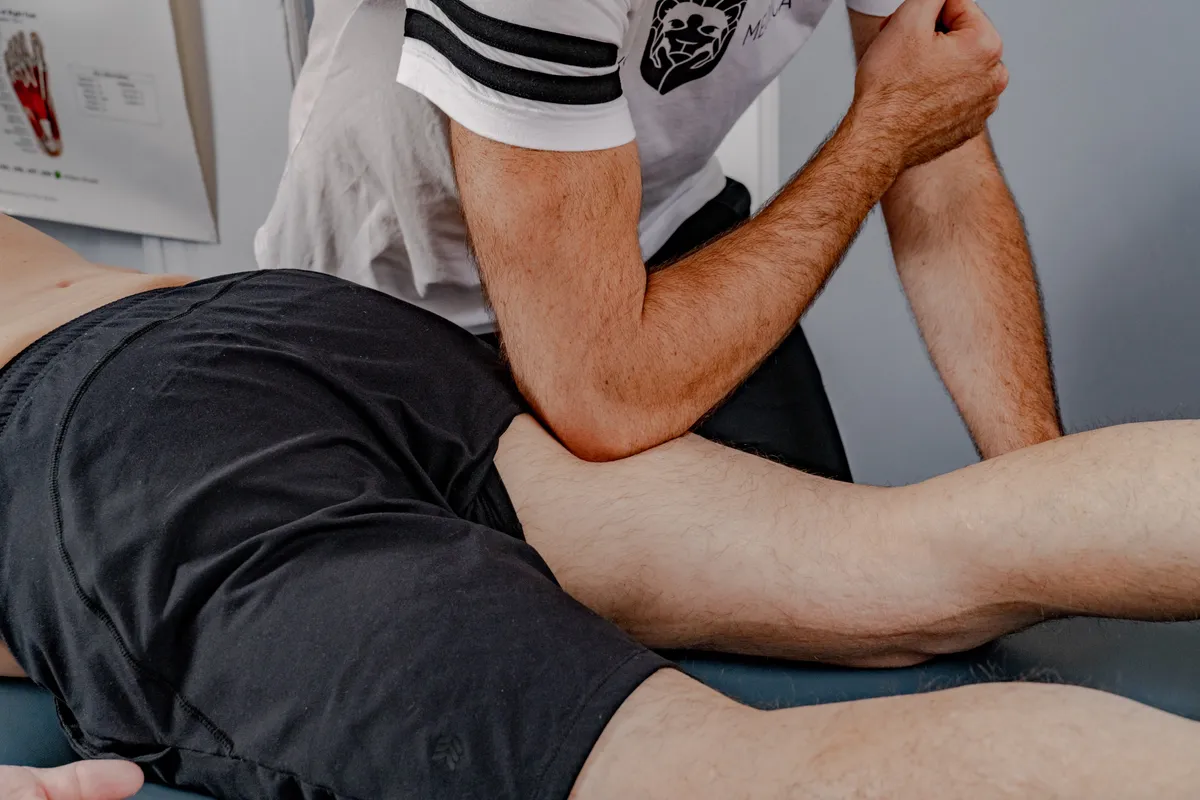
Deep Tissue & Sports Massage in Baltimore
Dr. Maks Birikov, DPT treats muscle knots, trigger points, and movement dysfunction with hands-on clinical bodywork. Not relaxation massage. He has worked with professional athletes from the Ravens, Orioles, and Baltimore Blast.
Every session is one-on-one with Dr. Birikov for the full hour. He assesses the tissue, identifies the source of restriction, and treats it the same day.
Out-of-network. HSA and FSA accepted.
Clinical Deep Tissue Work. Not a Spa Massage.
Deep tissue massage at a spa is designed to feel good. The therapist works through layers of muscle, applies sustained pressure, and the goal is relaxation and temporary relief. There is a place for that. This is not it.
Clinical deep tissue therapy is diagnostic first. Dr. Birikov is pressing into tissue to find something: the restricted fascia, the trigger point that is referring pain elsewhere, the adhesion that formed after an old injury and never released. The pressure is purposeful because the target is specific.
If you have had massage before and felt better for two days before the pain returned, the work was probably treating the symptom. The muscle that keeps tensing up is usually protecting something underneath it. Finding that something is what clinical work does differently.
Sports Massage for Athletes Who Need More Than Recovery
Standard sports massage has value in a training context: flushing metabolic waste, loosening the legs before a race. But athletes who are actually injured, or who have a pattern that keeps recurring, need something more specific.
This is for you if
- You want hands-on bodywork: fascia, joint, nerve, needle. Not a program of exercises.
- You have already tried PT, massage or chiropractic and are still in pain.
- Your problem is chronic, recurring, or has never been explained to your satisfaction.
- You would rather have one hour with the doctor than three appointments with three people.
- You are willing to pay out of pocket for undivided expert attention.
This is not for you if
- You are looking for an exercise-based rehab program supervised by an aide.
- You need a clinic that bills your insurance directly and books you three times a week.
- You have an acute traumatic injury that needs imaging or surgical evaluation first.
- You want a single visit that makes a decade-old pattern disappear.
What Dr. Birikov's Approach Treats
The conditions below are the most common presentations. Many patients arrive with a diagnosis that explains their imaging but not their pain, or no diagnosis at all after months of appointments. Both are appropriate starting points.
This is for you if
A shoulder that will not lift past ninety degrees, treated at the shoulder for months. The ribs underneath it had stopped moving, so the scapula had nowhere to travel. Free the rib cage and the shoulder is not the problem anymore.
A hip held by a fifteen-year-old scar
Deep hip pain, clean imaging, no explanation. An old abdominal incision had bound the fascia above it, and every stride was pulling against that anchor. Mobilize the scar and the stride returns.
Professional Athletes Dr. Birikov Has Treated
Dr. Birikov has worked with athletes from the Baltimore Ravens, Baltimore Orioles, and Baltimore Blast. Hundreds of athletes at the highest level of their sport.
- Back Pain
- Neck Pain & Headaches
- Sciatica
- Sports Injuries
- Postural Problems
- Scoliosis
- Chronic Pain & Fascial Restrictions
- Scar Tissue & Post-Surgical Rehab
- Muscle Tension & Trigger Points
- Breathing Dysfunction
- TMJ & Jaw Dysfunction
- All conditions treated
What to Expect in a Session
Assessment first
Dr. Birikov will ask where it hurts, how long it has been there, and what you have already tried. He is not collecting paperwork. He is building a mechanical picture before he touches anything.
Hands-on evaluation
Palpation tells him what imaging cannot: where the tissue is dense, where it is not moving, where one structure is pulling on another. He may assess your posture, your gait, or your breathing pattern depending on what the problem suggests.
Treatment the same day
You are treated in the first session. Depending on what the assessment finds, that may include deep tissue manual release, instrument-assisted soft tissue work (firm tools that break up fascial adhesions and scar tissue), cupping (suction that decompresses restricted tissue layers), or dry needling (thin filiform needles inserted into trigger points to release them). The tools used depend on what the tissue needs, not on a preset protocol.
About discomfort: an honest account
Clinical deep tissue work is not a spa experience. Pressure on a genuine trigger point or a restricted fascial layer will feel intense. That intensity is information. It confirms the location and often produces a referred sensation that maps directly to the patient's pain pattern. Therapeutic discomfort is purposeful and temporary. It is not the same as harmful pain. If something feels sharp, electric, or wrong, you say so and the technique changes immediately.
It is common to feel sore for 24 to 48 hours after deep tissue work, similar to the soreness after a hard training session. Most patients find this manageable. If you have a demanding schedule, booking a session the day before a rest day is worth considering. Bruising from cupping is possible and fades within a few days. This is a normal physiological response, not tissue damage.
Frequently Asked Questions
How is one-on-one physical therapy different from PT at a regular clinic?
What is the difference between deep tissue massage at a spa and clinical deep tissue therapy? A spa therapist applies deep pressure for relaxation and general tension relief. Dr. Birikov applies deep pressure to locate and treat a specific mechanical problem: a trigger point, a fascial restriction, an adhesion. The pressure may feel similar; the intent and the result are different. Clinical work is diagnostic. It changes based on what the tissue tells him.
How many sessions will I need?
How is sports massage different from regular massage? Sports massage at a general clinic typically focuses on circulation, muscle flushing, and pre- or post-event preparation. At Physica Medica, sports massage means identifying the mechanical dysfunction that is causing the injury or limiting performance, then treating it with the appropriate manual technique. That may include deep tissue work, instrument-assisted release, cupping, or dry needling depending on what the assessment shows.
Do you take insurance for one-on-one physical therapy?
Will deep tissue massage be painful? Work on restricted tissue is often intense. A trigger point that has been active for months will be sensitive when compressed, and that sensitivity is part of why it has been causing symptoms. Dr. Birikov works at a depth appropriate to what he finds, and the level of pressure is always something you can direct. Soreness after the session is common and typically resolves within one to two days. Most patients describe the experience as productive rather than comfortable. That is a meaningful distinction.
Book a Deep Tissue or Sports Massage Session
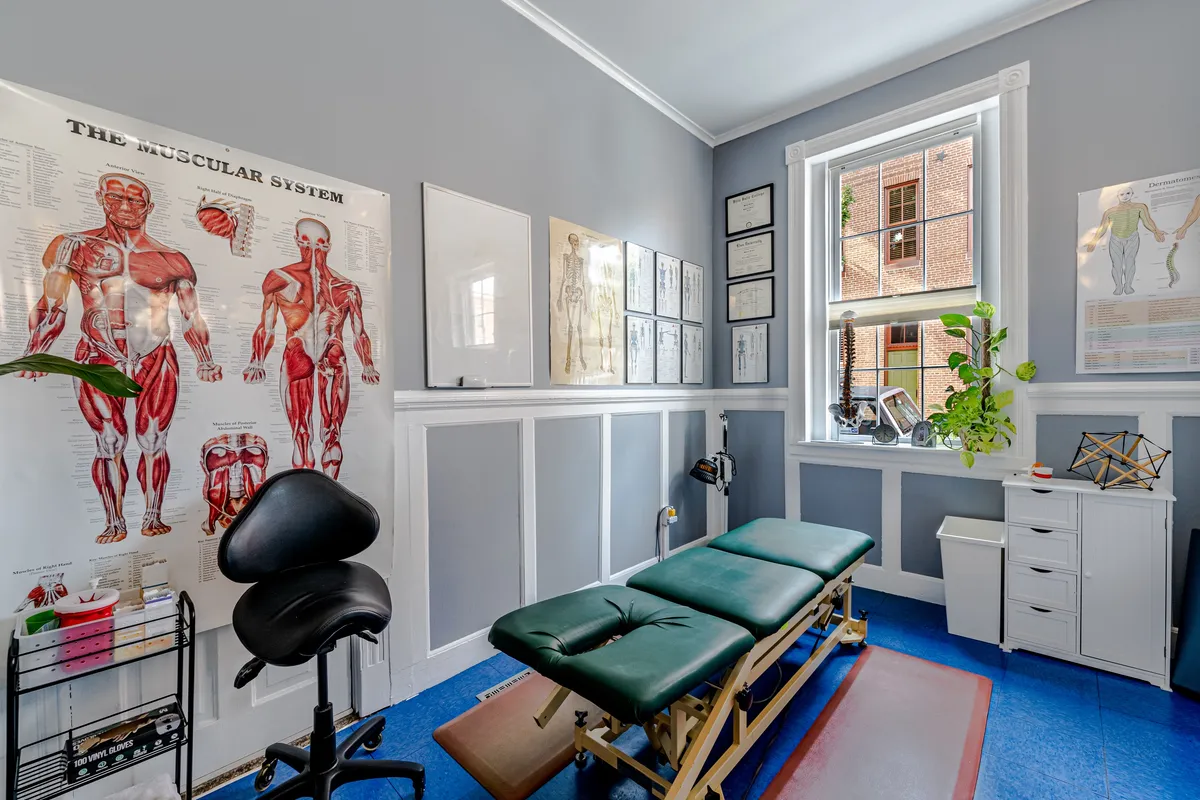
Physica Medica is located at 800 S Bond St, Baltimore, MD 21231. To book, send a message describing what hurts, how long it has been a problem, and what you have already tried. That context lets Dr. Birikov confirm the session is appropriate before you arrive.
Dr. Birikov reads every inquiry personally and responds directly. Call 443-228-8029 or use the contact form.