
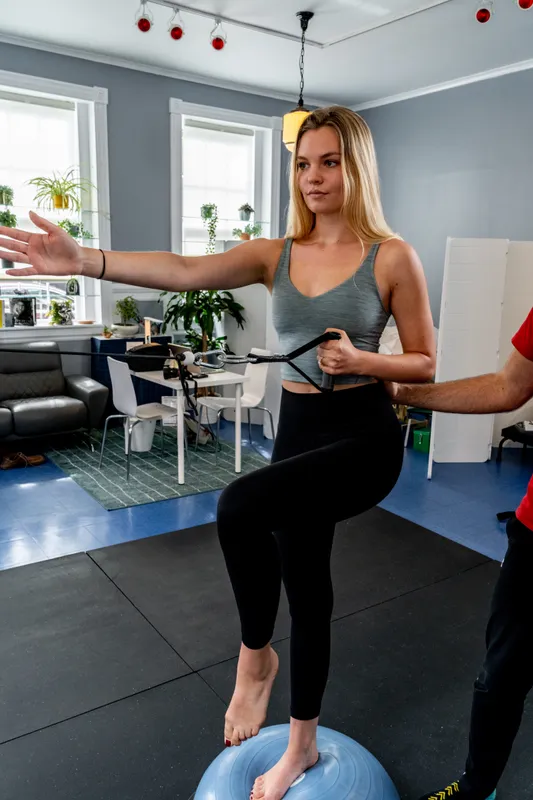
Functional Patterns Training in Baltimore
Dr. Maks Birikov, DPT, is the first and only Functional Patterns practitioner in Baltimore. If your pain keeps returning no matter what you do, the problem may not be the tissue. It may be the movement pattern that keeps recreating the damage.
Functional Patterns is a structured methodology for identifying and retraining the fundamental movement patterns the body relies on every day: gait, rotation, pushing, pulling. When those patterns are off, pain and dysfunction follow. No amount of symptom treatment will stop them from coming back.
Out-of-network by design. HSA and FSA accepted.
What Is Functional Patterns and Why Baltimore Has Only One Practitioner
Functional Patterns is an internationally recognized training methodology built on one premise: the body's pain and dysfunction are usually downstream effects of how it moves, not isolated failures of individual muscles or joints. The system uses a specific assessment and correction protocol to identify where your movement has broken down, then rebuilds those patterns from the ground up.
Dr. Birikov completed the Functional Patterns certification process and is the first practitioner to bring this methodology to Baltimore. That is a verifiable fact, not a marketing claim. If you have been searching for Functional Patterns in the Baltimore area, this is the only place to find it.
The certification is rigorous by design. Functional Patterns requires practitioners to demonstrate mastery of biomechanical assessment and movement correction before working with clients, which is part of why the credential remains rare.
How Functional Patterns Differs from Personal Training and Standard PT
This is not a fitness program. The goal is not strength, cardio capacity, or athletic performance, though those may improve as a side effect. The goal is to identify the compensatory movement patterns your body has developed over years, often in response to old injuries or structural restrictions, and systematically correct them.
This is for you if
- You want hands-on bodywork: fascia, joint, nerve, needle. Not a program of exercises.
- You have already tried PT, massage or chiropractic and are still in pain.
- Your problem is chronic, recurring, or has never been explained to your satisfaction.
- You would rather have one hour with the doctor than three appointments with three people.
- You are willing to pay out of pocket for undivided expert attention.
This is not for you if
- You are looking for an exercise-based rehab program supervised by an aide.
- You need a clinic that bills your insurance directly and books you three times a week.
- You have an acute traumatic injury that needs imaging or surgical evaluation first.
- You want a single visit that makes a decade-old pattern disappear.
What a Functional Patterns Session Involves
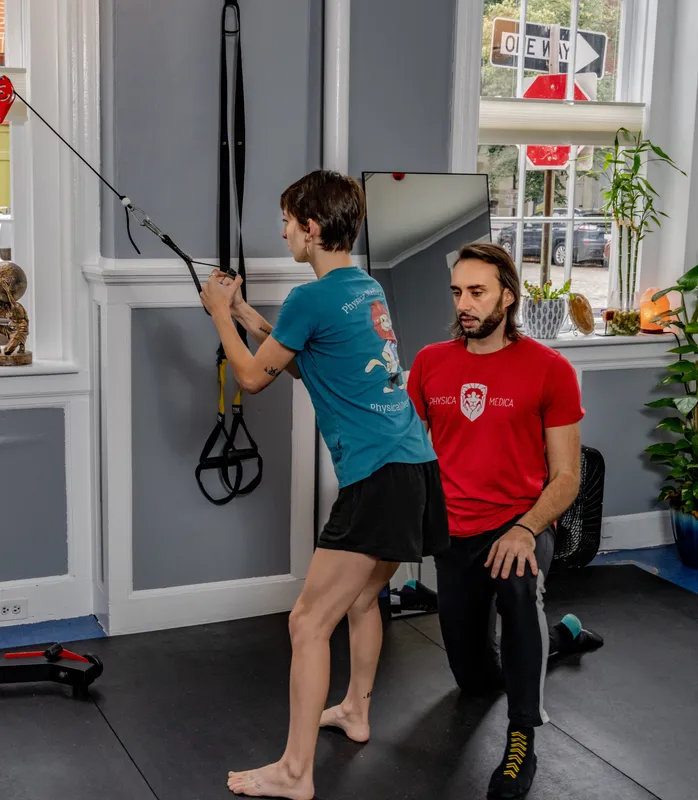
Sessions begin with movement assessment. Dr. Birikov watches how you walk, how you rotate, how your body distributes load across its major systems. This is not a subjective impression. Functional Patterns uses a structured observational framework to identify specific breakdowns in the four foundational human movement patterns.
A shoulder that lives in the rib cage
From there, Dr. Birikov works through a correction sequence tailored to what the assessment reveals. This may involve manual therapy to address restrictions that are preventing the pattern from changing, followed by movement re-education to teach the body a different way of organizing itself.
A hip held by a fifteen-year-old scar
Because Dr. Birikov holds a Doctor of Physical Therapy degree alongside the Functional Patterns credential, sessions can incorporate hands-on manual work including fascial release, trigger point treatment, or dry needling when tissue restriction is part of what is holding the movement pattern in place. That integration is not available from a movement coach working outside a clinical license.
Who Benefits from Functional Patterns Training
Functional Patterns is particularly well-suited to one kind of patient: the person who has already done the work. You have been to PT. You have tried chiropractic, massage, maybe yoga or Pilates. The pain improved, then came back. Or it never fully resolved. Or you were told your imaging was clean and there was nothing structurally wrong, which left you with no explanation and no path forward.
Functional Patterns and Long-Term Postural Change
Why posture keeps reverting
Postural correction is one of the most commonly attempted and least successfully maintained interventions in musculoskeletal care. People are told to stand straighter, pull their shoulders back, engage their core. They do it consciously for a few minutes and then revert. This is not a willpower problem. It is a pattern problem.
What actually changes posture
Posture is the static expression of how your body organizes movement. If the movement patterns are dysfunctional, if your gait is asymmetrical, if your rotation is restricted, if your body has learned to brace through one side because of an old injury, the posture will reflect that, and no amount of conscious correction will override it for long.
The Functional Patterns approach
By retraining the movement patterns that generate posture, Functional Patterns produces structural change that does not require constant conscious maintenance. The body reorganizes because the underlying mechanics have changed, not because you are reminding yourself to sit up straight.
Realistic timelines
Postural change through movement retraining takes longer than symptom relief. Most patients working on postural and movement pattern correction begin to see meaningful change within 6 to 10 sessions. Patterns that have been present for years take time to retrain. Dr. Birikov will give you an honest assessment of what your specific case requires at the first session.
Sessions are one-on-one for the full hour. Dr. Birikov assesses you, works with you, and monitors how your movement responds throughout. Not an aide, not a shared appointment.
Train with Baltimore's Only Functional Patterns Practitioner
How is one-on-one physical therapy different from PT at a regular clinic?
What makes Functional Patterns different from other movement training systems? Most movement systems address specific muscles or joints. Functional Patterns addresses the patterns those muscles and joints are organized into. The four foundational patterns (gait, rotation, pushing, pulling) are what the human body actually does all day. Correcting dysfunction at that level produces changes that carry over into everything else.
How many sessions will I need?
Is Functional Patterns physical therapy, personal training, or something else? It is a distinct methodology. At Physica Medica, it is delivered by a licensed Doctor of Physical Therapy, which means clinical assessment and hands-on manual work can be integrated when the case requires it. That combination is not available from a movement coach or personal trainer operating outside a clinical license.
Do you take insurance for one-on-one physical therapy?
How many sessions does it take to see results with Functional Patterns? For movement pattern correction and postural change, most patients see meaningful progress within 6 to 10 sessions. If you are also dealing with active pain or tissue restriction, the first few sessions may focus on manual work before movement retraining begins. Dr. Birikov will give you a specific estimate after your first assessment. Not a vague range, but an honest read of what your case involves.
Book Your First Session
Send a message describing what you are dealing with: what hurts, what you have already tried, and what has not been explained to your satisfaction. Dr. Birikov reads every inquiry personally and responds directly.
No referral required. New patients are welcome. Physica Medica is located at 800 S Bond St, Baltimore, MD 21231. Phone: 443-228-8029.